Gender In/equality in Media and Journalism: Final Assignment Submission 2020

For the past five weeks, I have been taking part in a virtual exchange facilitated by The Sharing Perspectives Foundation. The virtual exchange takes place once a week for two hours, and the topic that this particular virtual exchange revolves around is ‘Gender In/equality in Media and Journalism’. The final assignment for this virtual exchange is to come up with a question, as a group, that we will ask our respective communities. The question that we decided on has two parts: first we were to ask the individuals in our communities what they thought the percentage of women in decision-making and leadership roles within the media was. After they made their guess, we had to inform them of the true percentage, based on the studies mentioned by Karen Ross in the Week 2 video lecture ‘Research Trends and Patterns’. The second part of the question was to ask what their reaction is and what their thoughts are on this true percentage.

I interviewed 10 people in my community, 5 male and 5 female. I have decided to deliver my results in written form, in order to present the responses that I received from the members of my community who participated in this assignment. Firstly I am going to give a brief overview of both of the studies Karen Ross spoke about in the video mentioned above. Then I will write out the responses of all the people in my community who took part and helped me to complete this assignment. Lastly I will present the average guess of males and the average guess of females in comparison to the figures of the global study and the European study, and I will discuss why I think this is important to mention.

In the video lecture Karen Ross informed us that one of the first efforts to document and analyse the specific issue of women in decision making in the media was commissioned by UNESCO in 1987 and was called ‘Women and media decision making – the invisible barriers’.  This study focused on women’s employment in news companies and the investigation included 59 nations and 522 organisations it found that women held only 25% of top management and board positions.

In 2013 the European Institute for Gender Equality published it’s findings on the same topic (women and men in decision-making positions and on boards in selected media organisations in the EU. This study focused on the then 27 EU member states & Croatia, and surveyed 99 large scale European media houses. This study found that of nearly 3500 senior positions only 30% were occupied by women. Karen Ross also thought it was worth mentioning that only 16% of Chief Executive Officers were women, and only 21% of Chief Operating Officers were women. She said that this demonstrates that although women are occupying positions of authority, they are much less likely to be in positions of power.

Now I will present the responses I received, from the members of my community, for both parts of our final assignment question. I will label them as “P1, P2, P3” etc, in order to maintain their privacy. (P = Participant, Q = Question)

Participant 1

Q1: 40%

Q2: “I find it quite shocking that women have less than half of the percentage in that field of work even though it’s probably one of the most important, if not most important industry in the time we are living in. I would have thought that it would be closer to a 50/50 split between men and women.”

Participant 2

Q1: 35%

Q2: “I’m surprised that that figure had increased so little after almost 30years.”

Participant 3

Q1: 55%

Q2: “I’m surprised that it’s not way higher, I don’t know much about the media industry but I would have assumed that there was a lot more women in power within it.”

Participant 4

Q1: 40%

Q2: “That is lower than I thought, that’s ridiculous but I suppose only certain countries have quotas for having women in top positions but I don’t know if quotas even work.”

Participant 5

Q1: 35%

Q2: “I’m definitely not surprised but I think it’s really upsetting and shows the strong hold that men have over positions of power. It’s not surprising but it is shocking how little it has changed over time, considering we are living in a “modern society” where we are supposed to be striving for equality.”

Participant 6

Q1: 16%

Q2: “I can’t believe the figures are that high, it doesn’t seem realistic at all, but maybe we’re just not exposed to it? I suppose it would make a bit more sense if you take fashion magazines etc. into account.”

Participant 7

Q1: 15%

Q2: “I’m surprised that it only increased by 5% but to be quite honest I am very surprised that it was that high in the first place.”

Participant 8

Q1: 30% (hard to know.. plenty of women are at the forefront actually presenting and things like that but I would say in terms of decision making maybe less than half, maybe 30%)

Q2: “I was initially happy that the percentage has gone up but now I’m thinking about the years this research was released and I think it should definitely have gone up more in that amount of time. Ideally it would be at 50% by now. Maybe it’s higher now again since 2013 but I doubt it would be that much higher considering it was only a 5% increase in 26 years.”

Participant 9

Q1: 20% (I reckon there are loads of positions in media held by women, like broadcasting etc, but I would say that the percentage for decision making roles is very low)

Q2: “That is a tragically small increase for 26 years haha.”

Participant 10

Q1: 20%

Q2: “I’m not surprised, women are still fighting for jobs in positions of power now 7 years later.”

The average guess by males is slightly higher than the average guess by females (32% vs 29%). I did expect this, as I thought women would be more aware of the gender gap in leadership roles. However, the disparity is a lot smaller than I had expected. This tells me that men in my community are also aware of the ever-present issue of women in leadership roles, and this gives me hope that one day we will reach the goal of gender-equality in media and other industries.

The End ?

Welcome back guys, gals and everyone in between

In my blog posts up until now I have discussed a wide range of topics and this post is simply going to be a reflection on them.

As you may know, this all started as a part of the Language & Technology module that I have been taking in The University of Limerick. We were given eight tasks to complete within the blogs over a course of 12 weeks. These tasks have finally been completed and I could not be happier.

Related image

I heard a few years ago that the best way to learn something is to teach it to someone else. This is effectively what I have been trying to do while discussing Computer Assisted Language Learning (CALL), Intercultural Communicative Competence (ICC), Corpus Linguistics & Gaming. I explored these topics for the first time and tried my best to simplify what they meant not only for my own understanding, but for yours too. I also gave insight into my thoughts on each of these individual topics.

In most of my posts I also spoke about my own personal relationship with the topics e.g. my phone usage habits, my learning style and different blogs, websites & channels that I like to use to help with my language learning.

As I have mentioned many times I am not a creative person, and my writing is no exception. I found this whole blogging assignment quite daunting and I have to say I hope I never have to do anything like this as part of my college work again.

Having said that, I have always wanted to document my travels  in a blog (even if I’m the only one willing to read them). Maybe this assignment has given me the push I needed to bite the bullet.

Image result for just do it

It may take a week or it may take a year, but I think I finally have the courage to start writing about my adventures, which I admittedly would not have without being forced to start a blog for the sake of my grades.

Thank you for sticking with me as I try to navigate the world of blogging. I hope it’s been as much of a learning curve for you as it has for me.

Until next time,

Kayla xo

I Plead Guilty.

Hello, hi, hey, welcome back etc…

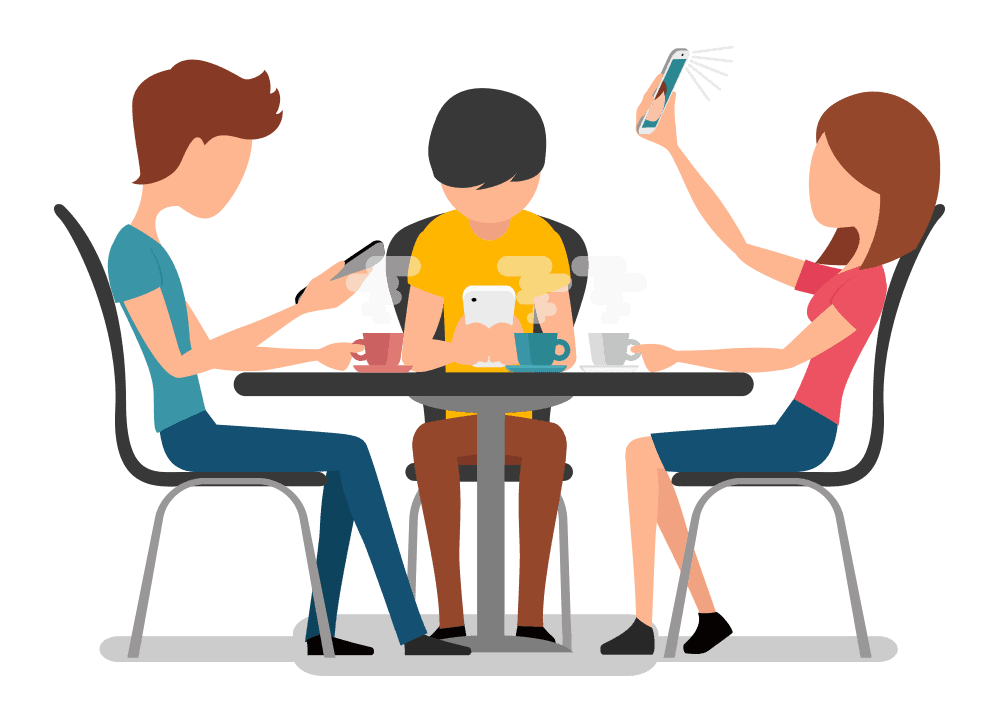
Okay, I’m going to dive straight into this one. Screen time: I spend A LOT of time on my phone. I won’t even try to deny it, I am guilty of multiple counts of mobile phone over-use.

Image result for phone usage and loneliness 

So basically, I always have my phone on me, if I’m not with my friends or family, then I’m talking to them on SnapChat or WhatsApp. If I’m bored, then I’m browsing social media, watching Netflix or checking out what’s up on YouTube. I wasn’t going to bother downloading any apps to track my screen time because quite frankly I don’t think any of the ones available on the AppStore are accurate, at least not the free ones anyway. But I did it, I had nothing to lose so I bit the bullet and I downloaded RealizD.

Image result for realizd

It looks good on the surface, it has lots of features and different options to show you variations of the data it supposedly collects. As I said above however, it’s not entirely accurate. For the first day or two that I used it, it tried to tell me I had only spent 42minutes looking at my screen per day. I cannot, in good conscience, pretend that I was pleasantly surprised or that there was even the slightest possibility that this could be true. I knew full well the information was completely incorrect. The app allows you to adjust the data of the previous days if you so wish and so I began timing myself as much as I could to paint a more accurate picture of my screen time and then updating the times manually myself.

I’ve never been the kind of person to enjoy my own company. I don’t like being on my own or in my own head, a trait I hope to one day outgrow but for now it’s my reality. Having constant contact with my friends and family helps me to feel less alone even if I am not physically in the presence of another. That being said, I do think that having that safety net has made me feel less of a need to physically interact with anyone and then when the time comes to go out or meet up for coffee I can find myself feeling anxious. An online journal I found actually explained what’s happening here.

The research started from the assumption that one of the major motives driving individuals’ Internet use is to relieve psychosocial problems (e.g., loneliness, depression). This study showed that individuals who were lonely or did not have good social skills could develop strong compulsive Internet use behaviors resulting in negative life outcomes (e.g., harming other significant activities such as work, school, or significant relationships) instead of relieving their original problems. Such augmented negative outcomes were expected to isolate individuals from healthy social activities and lead them into more loneliness.(Kim, LaRose and Peng, 2009) 

It becomes a vicious cycle: my desire to not be alone ends up making me less comfortable in social situations.

Another factor that I think contributes to the time that I spend looking at a screen is that there is rarely a time when I need to use an actual book for studying anymore. Almost all of my studies and academic assessments are done online.

In another volume of the online journal I mentioned already, it explains the finding of research conducted on “University students’ internet use and its relationships with academic performance, interpersonal relationships, psychosocial adjustment, and self-evaluation”

This study examined the relationships between university students’ Internet use and students’ academic performance, interpersonal relationships, psychosocial adjustment, and self-evaluationStudents completed a questionnaire online. Heavy Internet users and nonheavy Internet users differed significantly on a number of dimensions. Nonheavy users had better relationships with administrative staff, academic grades, and learning satisfaction than heavy Internet users. Heavy users were more likely than non-heavy Internet users to be depressed, physically ill, lonely, and introverted. (Chen and Peng, 2008)

The results and conclusions of this research are actually quite sad when you think of all the time university students nowadays have to spend online. Getting a good degree more than likely means increasing your internet usage and then dealing with all of the side effects.

I hope you found this blog as interesting to read as I did to write. Now, if you’ll excuse me, I’m going to go research how to combat the negative side effects of screen usage and then hopefully detach myself from my screen.

Until next time,

Kayla xo 

Intercultural Communicative Competence (say it three times and fast)

Welcome back again.

For this blog I will be discussing Intercultural Communicative Competence (ICC). As someone who likes to travel, meet people from different places, and learn about different cultures, this is a concept I find really interesting. I’ll be exploring this topic by answering some questions set out by my lecturers in the University of Limerick in relation to ICC and it’s connection to language learning.

First of all I think it’s appropriate to explain exactly what ICC is. The best definition and explanation I could find came from a British website called TeachingEnglish:

“Intercultural communicative competence, or ICC, refers to the ability to understand cultures, including your own, and use this understanding to communicate with people from other cultures successfully. 

Example
ICC could include understanding how gestures and the distance between speakers vary from culture to culture.”

Q1. Do you think ICC is an essential component of learning an L2?

When I study a language that is not my native language, I do so with the intentions of one day being able to communicate to a high standard in that language. I intend to be able to speak with natives and navigate my way around the countries where that language is spoken. With this in mind, I do think ICC is an essential component of second-language acquisition. The goal is to achieve a high-proficiency in the language, to engage with the native speakers as if you are one yourself. This goal is not achievable if we, the language learners, are unaware of the cultural differences and unable to apply them.

In the case of, for example, Leaving Certificate students who are only learning a certain amount of a language for the sake of having to pass an exam, and who do not want to continue learning the language until a high proficiency has been achieved, I don’t think ICC is high on their list of priorities, nor should it be. However for third-level language students, those hoping to one day work professionally with a foreign language, it should undoubtedly a priority.

Q2. Do you think it is possible to assess students’ intercultural competence objectively?

To answer this question I researched different methods and guidelines for assessing ICC. After clicking on a third link it became apparent that the completely objective assessment of ICC simply isn’t achievable.

Sure, if there are specific ICC learning objectives set out by teachers, then students can be assessed based on these objectives. However, different people are going to be aware of or become aware of different cultural differences for various different reasons. So if you’re going to assess anyone’s ICC in a general sense without any set objectives to be achieved, you’re going to be subjective. This is because you will be assessing theirs by comparing your own. They may have ICC in aspects and areas that you have none and vice versa. As of yet, there is no one set model or method of assessing ICC, which means it is up to the individual assessor to decide as they please.

There are plenty of books and articles to be found online that give “guidelines” for assessing ICC but they include the “requirements” that should be assessed so again, to assess ICC objectively there needs to first be objectives to achieve.

Q3. Do you think that ICC is important for your future employability? How?

I do believe that ICC is important for my future employability because I plan on working in a multi-cultural setting. Whether that is a career in TESOL, the tourism industry or something else entirely, I have chosen to pursue a degree in modern languages because I enjoy interacting with people from other countries and cultural backgrounds and that’s exactly what I wish to do in the future. Therefore, ICC will be important for whichever career I choose because to effectively engage with people from other cultural backgrounds in a professional setting a good sense of ICC will be imperative.

If you would like to read up on some research about this particular question I highly recommend this online document from The Open University.

Q4. Would current social challenges in the globalised world benefit if graduates had developed ICC during their college years? 

This is obviously a major “what if” question. All I can do to answer it is give my personal opinion on the matter, which of course you can feel free to agree or disagree with because I am always up for long discussions on these kind of topics.

Of course, a lot of the current social challenges in the globalised world (e.g. discrimination) stem from ignorance and intolerance. If people were more open to learning about other cultures and customs I truly believe that we could overcome these problems. A lot of graduate degrees wouldn’t necessarily include ICC and would not see a value for it e.g. a biomedical science degree, why would that include an ICC module or class?

What can happen however, is that we continue on the path of acceptance and cultural awareness that my generation and younger generations are now exposed to. New social issues will constantly arise as the years go on, but that doesn’t mean that there will be as little understanding and as much intolerance as there is today. Travel, interact with international students etc. Do whatever you can to develop your own ICC, you can only become a better person for it.

I don’t know if I answered any of your questions or if I did a really bad job of discussing this topic and left you more confused than you already were but let me know in the comments below.

Until next time,

Kayla xo


TeachingEnglish | British Council | BBC. (2018). Intercultural communicative competence. [online] Available at: https://www.teachingenglish.org.uk/article/intercultural-communicative-competence [Accessed 26 Nov. 2018].


Corpus Ling-wha?

Hey there everybody (Banana’s in Pyjamas, 1993)

I suggest you buckle your seat belt if you have not already done so, not for any particular reason I just have no witty way of beginning this blog. However today I am taking you with me on a journey through Corpus Linguistics 

Image result for exciting

Not really at all an exciting topic, I know, I’m sorry, we all wish we looked like this little girl right now. You’d prefer not to be reading this blog?

Image result for BUT

Corpus Linguistics actually is very useful for language learning *shock*

Okie dokie let’s start with the basics: what is Corpus Linguistics? To answer this question I will refer to my old friend George Yule to give a to-the-point explanation: Corpus Linguistics is “the study of language in use by analyzing the occurrence and frequency of forms in a large collection of texts typically stored in a computer” (Yule, 2014). Basically what this means is you type a word or phrase into the database and a load of results come up showing you various possible uses and meanings for that word/phrase. A good example for how this could be useful to an L2 learner of English is searching effect vs affect (luckily google images has my back here).

Image result for example of concordancingImage result for example of concordancing 'affect'

I don’t know about you but I sometimes still get confused about when to use ‘effect’ vs when to use ‘affect’ and English is my native language. So with this in mind I reeeaaalllyyy sympathize with L2 English learners. As you can see using a concordance software (e.g. AntConc) can really benefit language learners in terms of contextualizing different words that sound/look identical or similar. In short: By looking at corpus instances of the searched word or phrase in the form of concordance lines, you can observe patterns of use that would go unnoticed otherwise.(Tesol.org, 2018).

I have to say at first I didn’t really see the point of this for general language learning, but once I actually looked into what’s involved in Corpus Linguistics I could not deny the benefits of corpora and using concordance software, even if only to clarify a few confusing words or phrases in the target language!

I can’t say that I will commit to using corpus linguistics anytime in the near future but I will probably look into it further down the line in my language learning journey as I try to reach a native level of proficiency in my target languages. I know the name makes it sound daunting and complicated but I would still recommend looking into it, I may not need it right now but it could be exactly what the doctor ordered for you or somebody else!

So, that wasn’t too bad was it? I tried to simplify the whole concept as much as I possibly could and to show you the main benefit of it to your language learning so you wouldn’t be so intimidated by the big bad C word if you come across it again in the future. I wish someone had done that for me!

Until next time,

Kayla xo

Tesol.org. (2018). Corpus What-. [online] Available at: https://www.tesol.org/read-and-publish/journals/other-serial-publications/compleat-links/compleat-links-volume-2-issue-3-(september-2005)/corpus-what- [Accessed 30 Nov. 2018].

Yule, G. (2010). The study of language. Cambridge: Cambridge Univ. Press.

Games vs Language Student

Hey, what’s up, hello (Fetty Wap, 2015) 

Welcome back amigos! This blog is going to be an insight into my discovery of Digital Game Based Language Learning (DGBLL). I have never been one for online gaming, and I highly doubt I will ever have an interest in being a ‘gamer’, so being asked to evaluate a game for language learning purposes as part of m college work was met with my unwelcome groan and a standard thought about dropping out of university altogether. As per, I soldiered on and did what needed to be done, and what I found surprised me.

The first thing I did was research the background and benefits of DGBLL, and the most interesting case study I found was based on an experiment where two groups were taught Arabic (Group A was treated with DGBL method whereas Group B treated with The Non-DGBL method) and the results showed that group A performed significantly higher than group B in a final evaluation. (Aziz, Subiyanto and Harlanu, 2018)

After reading this article and others like it I began to get curious. I started off small, I downloaded PixWords (by Dekvoir, Inc).

Image result for pixwords

This handy little vocabulary-boosting app is full of crosswords puzzles and can be played in 50 languages. I immediately opted for the French language option and I have to admit I was already struggling by ‘Niveau 2’.

The game shows a picture and highlights the row (which you’ve selected) that the word relating to the picture is supposed to fill, as well as the letters that should be used to fill the row. As you can see for a non-native speaker it’s not exactly an obvious answer, and it encourages you to take out your dictionary and expand your vocabulary. It was clear to me how a game like this could be of benefit to the language learning process, and I would be lying if I said I didn’t become a bit addicted to it.

I then, apprehensively, went on to read about games that fall into the bracket of a massively multiplayer online game (MMOG), which refers to ‘video games that allow a large number of players to participate simultaneously over an internet connection.’ (Techopedia.com, 2018). In an attempt to further understand the benefit a MMOG could have on language learning I decided to look at one of the biggest online games in the world: League of Legends (LoL).

Image result for league of legends

From some quick research, and speaking with someone who has played the game for a few years now (“the greatest League of Legends player of all time”), what I learned is: in LoL the base game traditionally lasts 30 minutes and has a set-up of two teams with five players each. The game has chat functions so players can type to their own team as well as to members of the opposition. LoL is an e-sport with international tournaments held at a professional level every year, the main two being held in LA and Berlin respectively. As the platform is multi-cultural there is often players who speak a variety of languages at any one time. To overcome any language barriers the game chat has a ping system i.e. specific options to send messages saying ‘on my way’, ‘danger’, ‘assist me’ etc. This is a useful feature because it is a fast-paced game that involves a complex co-ordination of 5 people at the same time.

Image result for league of legends ping chat

Basically, it is possible to play this game in a language that is not your native one if you so wish to. However, if you find players willing to communicate and play alongside you in an effort to further improve your language skills, you may want to already be able to communicate well in that language as it is, as I already mentioned, a fast paced game which requires complex co-ordination of multiple players at once. If you’re already able to communicate in your target language with a high-proficiency and you’re simply looking to better your ability to speak that language in a high-stress environment then by all means, take a swing at it.

I hope you learned something from this blog entry, I know I definitely learned a lot while writing it. I would like to think that maybe one of you would be motivated to give DGBLL a go in the future, but I think I’ll be sticking to my tried and tested methods of language learning. Unfortunately I still don’t ever see myself being a “gamer”.

Until next time,

Kayla xo

Me, Myself & Social Media

Welcome back guys

In this weeks post I will be talking about social media and the hand it may or may not lend a hand to my language learning endeavors.

Image result for facebook icon

We all have it, we all hate it, but none of us can manage to stay away from it: Facebook. This social media platform was the place to be when I was in my early teenage years, I was late to join the party as a result of being the first-born in my family, meaning I was restricted a lot more than most of my friends. It didn’t take me long after joining to realise it wasn’t all it was cracked up to be, but we won’t get into the intricate world of Junior Cert Facebook.

In terms of helping my language learning however, it hasn’t been without benefit. I followed multiple pages over the years to slowly gain some language learning tips and tricks while scrolling through my timeline. I also use Messenger to contact the friends I have made from France, Spain and wherever else in the world students have come from to my hometown to learn English.

Instagram is a platform that I avoided for a very long time because I thought it was simply a place to post selfies, something I have yet to be comfortable doing. But around three years after I first began hearing people around me talk about it, I gave it a go. For me it’s like a photo-album of the highlights of my weeks, months and years. It’s a celebration of good memories, I won’t lie, I’m fairly sentimental in that way. (I paused halfway through writing this to post a few pics from a wedding I went to at the weekend).

Anyway, moving swiftly on, I wouldn’t really say that Instagram helps my language learning much, but there is an account that I follow called frenchwords that has given me some useful proverbs, some poetic quotes and some everyday words that you wouldn’t really find in the schoolbooks. I have been following this account for over two years now and I still love it.

Image result for french words instagram

Of course I have saved the best for last. More or less my main form of communication (besides with my father or grandparents), Snapchat. It is my favourite, it makes communication with my friends fun and less robotic, we can see eachother’s facial expressions rather than having to guess whether or not the last text message was sarcastic. All around 10/10, it is definitely what I spend the majority of my phone time on, and I 100% spend way too much time on it.

Snapchat has not aided my language learning in any way whatsoever, but, in the words of Usher, “can’t stop, won’t stop”.

Although social media has given a little boost to my language learning, I’m not sure if I think that it has made any significant impact. In a blog post that I recently  read on fluentu , it discussed a new approach to language learning called SMLL, which uses social media as a tool for language learning. The blog claims that “Social media adds an element of interactive fun to the language learning equation”. I understand where this concept stems from, and maybe it just doesn’t suit my preferred way of learning, but I still don’t think social media will help my studies much more than it already has. However, this concept is backed up by research evidence which concludes that language learning is a social and interactive experience, not just for second language acquisition but also for children learning their first language.

Maybe I just haven’t given a good swing at incorporating my social media accounts into my language learning, and it will become the tool that helps me acquire a native-like proficiency in my target languages. For now though, I think I’ll stick with the traditional reading, writing, listening, and speaking with my classmates.

Until next time,

Kayla xo

Individual Learning Styles

Hello again.

In this week’s Language and Technology lab, we were given a link to click on which would take us to a quiz that would tell us exactly what our individual learning styles were. At first, I just clicked the link and ticked the boxes because I was being told to, not out of any genuine interest in the outcome. When I did get my results however, I realized that the feedback I was being given was a lot more interesting than I had anticipated.

I was told that I am a reflective, intuitive, verbal, global learner.  I don’t expect anyone to automatically understand what that means because I didn’t have a clue. So off I went and did a little research. What I found was some information in regards to each of those four layers of my apparent learning style. I was able to relate this information and descriptions to experiences I have had as a student in the past and so I decided to also take a look at the section that gave learning advice based on each layer, which I found made a lot more sense than I thought it would. I had already figured out some of these methods  for myself through trial and error, and had been employing them for quite some time.

As interesting as all this may be, the kind of learning style that I have and the learning methods that are best for me, is not the main topic of this blog post. The main topic revolves around the personalisation of language learning.

Image result for personalising learning

If it was possible to do so completely, I would definitely personalise my own language learning. There are a few ways I could do this, one way for example with French Grammar. Rather than having something explained to me for five minutes and then immediately trying to do grammar excercises in a group within the same class, I would be taught the principles in class then look over them and try to apply them myself in my own time. However, because we are in the age of interactive learning this would be quite difficult to achieve without annoying lecturer or tutor I come into contact with.

I believe the only way to fully personalise my language learning would be to have a one-on-one teacher who adapts their teaching style to fit my learning style. This, of course, is very unrealistic.

It goes without saying that there would be many advantages to personalising language learning. Faster learning, better understanding etc, but there would also be at least one major disadvantage to it; learning from others. Sometimes I feel I am fully competent in a subject and I’m confident in it, but then one of my classmates will ask a question to solve a problem I hadn’t yet thought of and would likely encounter further down the line. Getting the answer to a question I didn’t know I needed answered has spared me from being stumped when moving onto the more complex subjects.

All in all, personalising our learning experience would obviously benefit any student. However in the classroom environment it is simply not possible and so we should all instead do our best to personalise our learning when doing independent study.

If you’re interested in finding out what your individual learning style is then click on this link: http://www.engr.ncsu.edu/learningstyles/ilsweb.html

You never know, you might find some information that could completely change your learning experience!

Until next time,

Kayla xo

Do They Really Think One Size Fits All?

Hey everyone, welcome back.

I was given an assignment for this blog which, I have to admit, took me some time to get my head around. The assignment is to create my very own “Multimedia CALL package wish list“.  As someone who constantly reminds everyone around me how much I dislike technology and its essential (unforgiving) place in modern life, I can’t say I was too thrilled about the topic. After some sulking and under-breath muttering ,I have finally gathered my thoughts enough to try and make sense of what exactly it is that I would like from a CALL package.

After looking into the general criteria of CALL packages I have selected three features that I believe would impact my language learning in the most positive way.

The first feature I would add to my basket in a CALL package store is language skills. Everyone agrees that to become fully competent in any language you cannot simply stare at a book, learn off how to conjugate verbs and fill in the blanks in a few grammar questions at the end of the chapter. Undoubtedly grammar is an important aspect, but by no means is it the be all and end all of language learning. A “perfect” CALL package needs to help the learner accomplish accuracy in reading, writing, listening and speaking in the language they have chosen to devote time to learning. This means that the website or app needs to provide a variety of different tasks to test and help improve the learners capability in all four aspects of the language.

The second CALL package bonbon I would add to my pick’n’mix bag is for the programme to be learner-fit. Essentially what I mean by this is that there needs to be a competency test at the beginning and throughout the programme being used. This is necessary to ensure that the learner is not being subjected to boring, basic, beginner-level learning material, but is also not being quizzed on more complex grammatical or syntactical aspects of the language when they haven’t covered more basic material first. The CALL package needs to be programmed in such a way that it can effectively teach the language learner what they need to know, without skipping important information or boring the learner into quitting. How many times have we all started a new language on Duolingo and ended up bored or given up because the owl in the corner doesn’t explain the exceptions to already difficult sentence structures? Case in point.

The last, and in my opinion most important, feature that I desire in my dream CALL package is error correction and feedbackThis might just be me, but my pet peeve is not getting feedback on work I have done until it’s too late e.g. submitting an essay halfway through the semester and not receiving feedback until after the final exams. How is anyone supposed to learn from their mistakes if their mistakes are not first highlighted and discussed? As any language learner will know, every rule has an exception and when we accidentally box in that exception with the rule we are taught, we are simply told ‘incorrect’ and maybe given the correct answer without any explanation. We don’t learn from this, and every learner is different. I believe the solution to this is to have ‘assignments’ of some sort at the end of every lesson/topic taught by the CALL package and to have an actual human being with teacher-like knowledge correcting and explaining errors. I understand that this will probably prevent the CALL package from being free, like we all hope for, but if you’re really passionate about improving your proficiency in any given languages then you will want help from the best website or app you can possibly find.

There you have it, some insight into my mind and thoughts on computer assisted language learning (something that has become far too prevalent in my life). What do you think ? Is there a feature I didn’t mention that is more important than one, or maybe all, of the features I’d hope for?

Until next time,

Kayla xo

Aidez-moi!

Welcome back,

clearly the last post didn’t make you cringe yourself to death so here we go again.

In this post I’m going to talk about four different online resources that I have used over the years to help me learn and improve my French.

The first and most obvious one is Duolingo. We have all used it at some point or another. Whether that’s to actually aid in language learning at school or to entertain the notions that we all get sometimes e.g. “I’m going to go off and become fluent in Russian”. Duolingo can be used online, or with the app on your smartphone.

Image result for duolingo

I like Duolingo because it’s fun, easy to use, and you get daily reminders to practice your language skills. The different lessons are broken down by vocabulary or grammar. You are rewarded for finishing each lesson by unlocking a new lesson, leveling up and earning ‘gems’, which can be used for in-app purchases.

The only downside of Duolingo is it can sometimes feel a little too easy, and then it can be hard not to get bored and put it down for a few days or weeks, which of course is not ideal when trying to perfect your language skills.

The second online resource that I have used in an attempt to achieve some level of fluency in French is the website Fluent in 3 Months

(https://www.fluentin3months.com/).

Image result for benny lewis fluent in 3 monthsImage result for benny lewis fluent in 3 months

This website is owned and run by Benny Lewis, a self-taught Irish polyglot. He offers various tips on over-coming nerves when trying to speak a new language that we are not exactly proficient in. He promotes having the confidence to make mistakes because by this logic: how are we to improve our skills and fix our mistakes if we don’t put our embarrassment on the back-burner and make those mistakes in the first-place.

Benny Lewis has written books that focus on language learning for specific languages, but his blog and emails (which you can subscribe to on the website) focus on tips and tricks for language learning in general. I think they are great and fascinating to read about because they are tips from his own personal experience in learning different languages. It’s easier to believe that they will work as they are coming from someone who had not studied languages in college, but had actually taught himself as much as he could and is sharing his own nuggets of wisdom. He also links other language learning blogs on his website so his readers can gain insight into a variety of methods and tried & tested tips from language learners around the globe.

Another blog that I follow is Eurolinguiste by Shannon Kennedy, another Irish language learner. (http://eurolinguiste.com/). She has her blog divided into sections based on the 9 languages she has learned over the years, French included.

Image result for eurolinguiste

I find this blog to be really helpful because she writes about her own learning experiences with French and she also links in videos, websites, books etc. that aid in learning the French language for L2 learners. What I also love about this blog is her posts about her travels and various cultures, which I find extremely interesting to read as it ties my studies in with my travel obsession. Definitely well worth checking out if you’re looking for some new resources.

Last but not least, my favourite online resource for learning French is the Easy French section of the YouTube channel Easy Languages. 

(https://www.youtube.com/user/magauchsein/playlists?sort=dd&view=50&shelf_id=20 )

Image result for easy french youtube

This by far my favourite resource because it focuses on conversational, every day French. The channel is full of videos filmed in various locations across France, asking random French people their opinions on various topics. It is all subtitled and so it is easy to pick up on the differences between “proper” French and the French that is actually spoken by those who speak the beautiful language on a daily basis. (I could go into detail about the French language and it’s different registers & slang but I’m trying to keep t0 the point). It’s also good for pronunciation as you can hear and read the words at the same time. The videos are all short and sweet so as to avoid getting bored or overwhelmed. I highly recommend this channel to French language students, even just to have on in the background while cleaning, eating or getting ready for college in the morning.

Those are the four online resources I use on a regular basis to help me with my goal to achieve fluency in French. Once again, I hope I haven’t bored you, or tainted your opinion of me with my severe lack of writing skills.

Until next time,

Kayla xo